
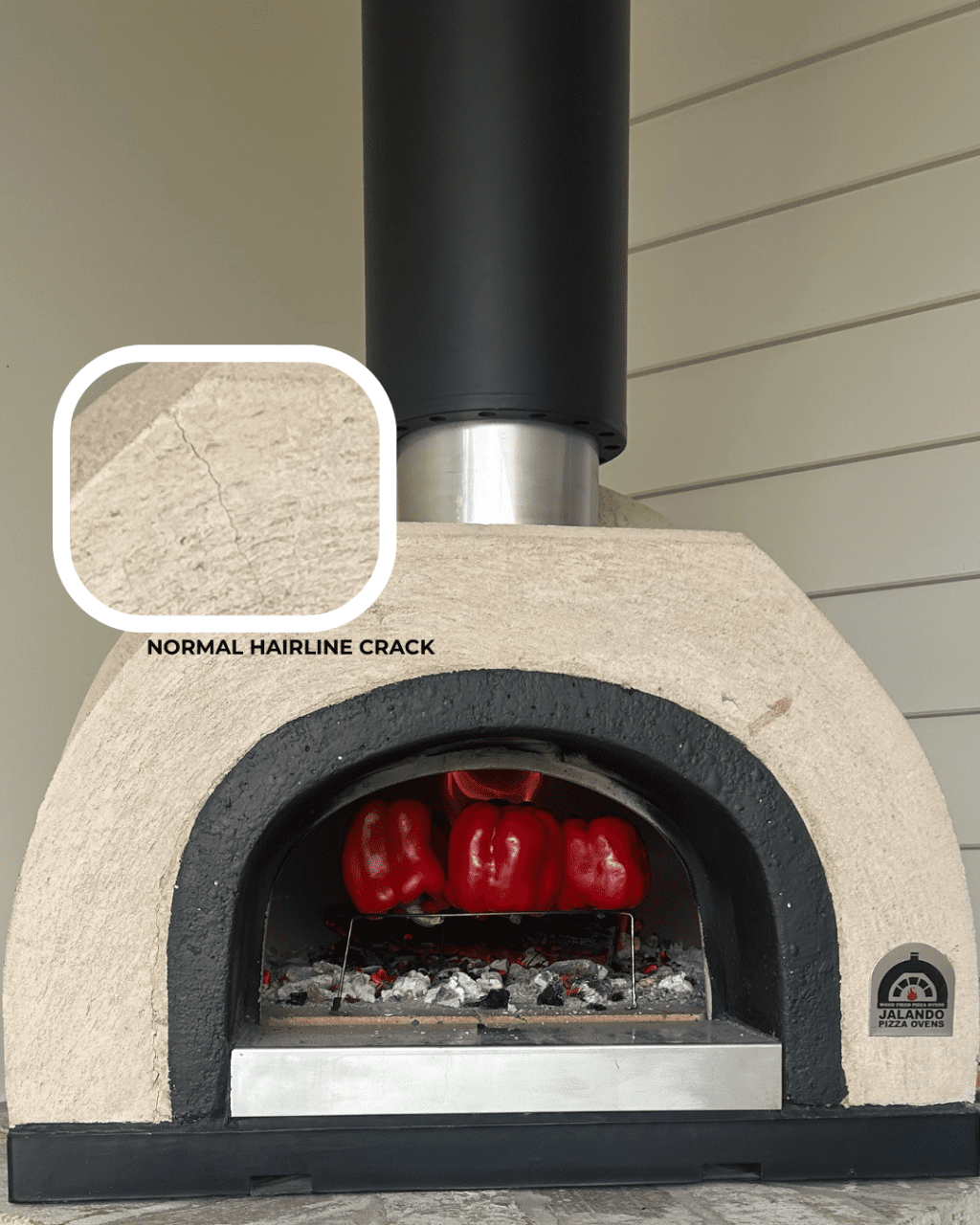


There is a moment during the first few firings, when every new pizza oven owner sees it. A fine line running across the dome. A thin crack near the front arch. And with it comes a sinking feeling that something has gone wrong.
It hasn’t. Hairline cracking in a refractory clay oven is not a defect. It is one of the most predictable things a wood-fired oven will do.
No matter how carefully the oven is cured, no matter how gradually the heat is brought up, small cracks will appear on both the inner and outer surfaces of the dome. We can guarantee it. The reason is simple physics.
rking out where to put it.
Refractory materials expand when heated to 400 or 450 degrees, then contract as they cool. That cycle of movement creates tiny stress lines, most commonly between the flue and the arch, around the vent opening, and along the curve of the dome itself. None of it is deep enough to affect how the oven holds heat or how it cooks.
Where owners can run into trouble is during the curing stage. Curing is the process of lighting a series of small, controlled fires over several days to drive residual moisture out of the clay and refractory cement before the oven is used at full temperature. Jalando recommends three to five low fires over three to five days, each lasting around four to five hours. It is not glamorous work, and the temptation to push the temperature higher and get cooking sooner is real. That temptation is worth resisting.
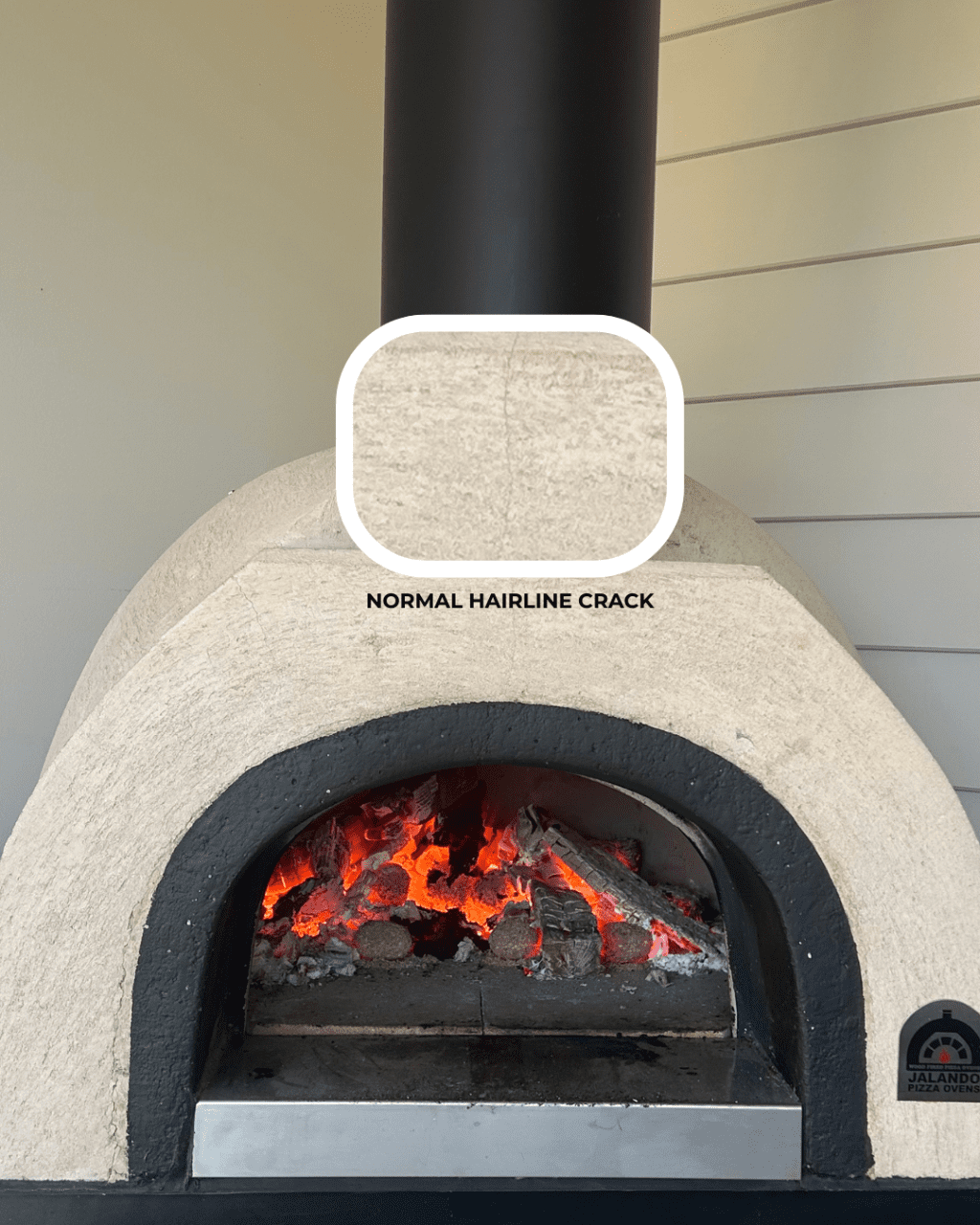
Rushing the curing process, or overloading the oven with wood too early, is the most common cause of cracking that goes beyond the cosmetic. A hairline crack at one millimetre is normal. A mortar crack wider than two millimetres is not, and it is almost always the result of too much heat too soon.
The good news is that larger cracks are rare when curing is done properly. And even when they do appear, they can be repaired with refractory cement or a little bit of mortar.
Once the oven has been cured and used for a handful of cooks, there are a few options for managing the surface long term. Both should only be applied after curing is complete and the oven has been through a few proper cooking sessions.
| Product | How to apply | What it does |
|---|---|---|
| Acrylic roll-on render | Roll directly onto the outer surface of the oven | Fills small cracks, flexes with the oven as it heats and cools, and waterproofs against rain and moisture |
| Bondcrete concrete sealer | Mix 1 part Bondcrete to 4 parts water and paint on. Use undiluted for larger hairline cracks. Dries clear | Fills fine cracks and seals joins for basic weatherproofing |
The only cracks worth watching are the wider mortar cracks, and those are easy to fix with the right product at the right time. Everything else is part of the territory.
For more detail, our Jalando FAQ page covers cracking, curing, and maintenance for both preassembled and DIY oven kits.
Hairline cracking is normal and expected, and it will occur. Small cracks in and on the outside of the oven do not affect performance when the oven has been cured as recommended.
Small cracks around 1 mm are within the normal range. Fine cracks commonly run from the base of the dome toward the keystone, and small cracks can also appear around the flue gallery and in the mortar joints of the vent arch at the front of the oven.
A larger crack in the mortar over 2 mm wide is rare, but it should be repaired.
Curing is the first and most important step before cooking. Larger cracks are more likely if the oven is over-fired early in the curing stages, so curing fires should be kept small and controlled and built up gradually over multiple sessions.
For mortar cracks over 2 mm, smooth over the crack using a similar material such as refractory cement, mortar, or clay, or use a repair kit. For sealing fine cracks and improving weatherproofing after curing and after cooking a few times, apply a concrete water sealer such as Bondcrete mixed 1 part Bondcrete to 4 parts water, and use undiluted Bondcrete for larger hairline cracks.