


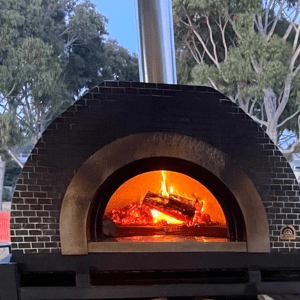
We’ve seen a range of avoidable issues from customers that can impact the performance and longevity of the oven (and the quality of the pizza).
Here are the most common mistakes people make, and how to avoid them.
If you’re still deciding which setup is right for you, visit our Preassembled Pizza Ovens or DIY Pizza Oven Kits pages for guidance on getting started the right way.
One of the most common mistakes is either not using the oven door at all, or not positioning it properly. The door plays a key role in retaining heat, managing airflow, and preventing soot buildup.
Tip: During cooking, the door should be slightly ajar (not fully sealed). This helps maintain a steady flow of oxygen while still containing heat. Door is not required at all however, when cooking pizza.
Tip: When heating up the oven, and the wood is smoking, use the door slightly ajar to encourage the smoke up the flue to reduce the soot build up on the front of the oven.

Moisture is one of the biggest threats to any pizza oven. Whether it’s rain, condensation, or water from cleaning, excess moisture can degrade the internal components, reduce thermal efficiency, and even crack the dome.
Tip: Always use a pizza oven cover when your oven is not in use, especially during colder months or in humid environments. If your oven is outdoors, shielding it from direct weather exposure is essential.
Yes, pizza ovens are designed to get hot, but there is a limit. Firing your oven too aggressively or using excessive wood too quickly can damage internal materials, particularly if you haven’t completed the curing process properly.
Tip: Use moderate-sized hardwood splits (never large logs), and gradually build up heat. Once you reach 350–400°C, you’re in prime cooking territory. Our guide on the Best Wood for Pizza Ovens breaks down ideal fuel choices in more detail.

Before you use your pizza oven for the first time, you need to cure it. Skipping or rushing this step is a fast track to structural cracks and performance issues.
Tip: Follow the manufacturer’s curing guide exactly, typically involving a series of low, gradual burns over several days. If you’ve purchased a model from our JA Series Pizza Ovens, refer to the product manual for detailed instructions.
Food residue, ash, and soot can quickly build up on the oven floor if not cleaned regularly. Not only does this affect taste, it can also create hot spots that burn the base of your pizza.
Tip: Invest in a multi tool set that includes a pizza oven brush and scraper. Cleaning after each session ensures better results and extends the life of your oven floor.

Browse our full range of Pizza Ovens and Accessories. or get in touch for expert advice on choosing and maintaining the perfect setup for your space.